
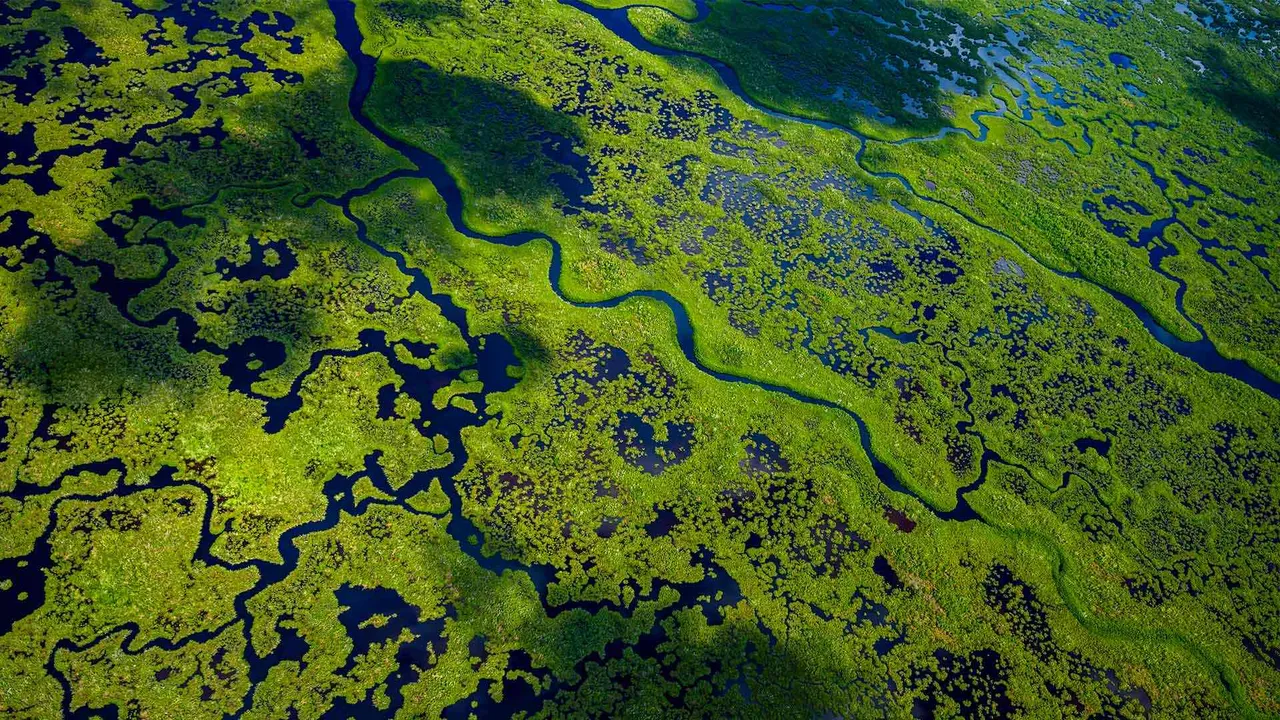
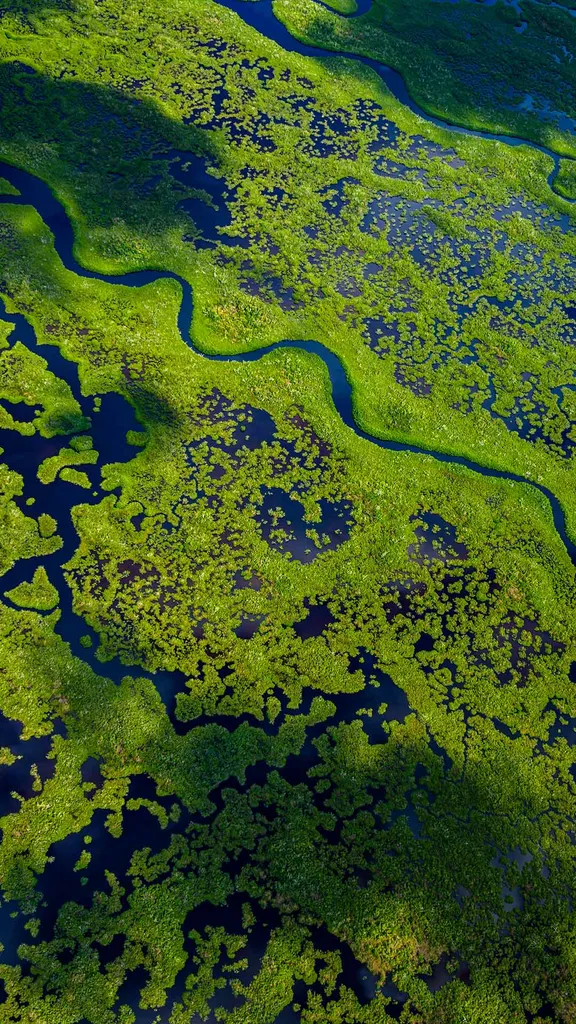
Aerial view of Everglades National Park, Florida, United States (© Tetra Images/Getty Images)
Few places show their power quite like Everglades National Park in Florida, United States. From above, Florida's iconic wetlands unfold as a vast patchwork of shallow water, sawgrass, mangroves and winding channels, shaped by freshwater flowing slowly south from Lake Okeechobee.
Covering more than 6,000 square kilometres, the Everglades is the largest subtropical wilderness in the country and a vital refuge for birds, fish, reptiles and rare species such as the Florida panther, American crocodile and West Indian manatee. Wading birds including roseate spoonbills, herons and wood storks feed across these wetlands, while mangrove forests protect coastlines from storm surges and erosion. Wetlands also work behind the scenes, filtering pollutants, storing carbon, reducing floods and helping supply clean water to nearby communities. Recognised as a World Heritage Site, the park remains one of North America's most important ecosystems. Its waters support alligators and bottlenose dolphins, while seasonal rains and dry periods continually reshape habitats across the sprawling landscape each year.