
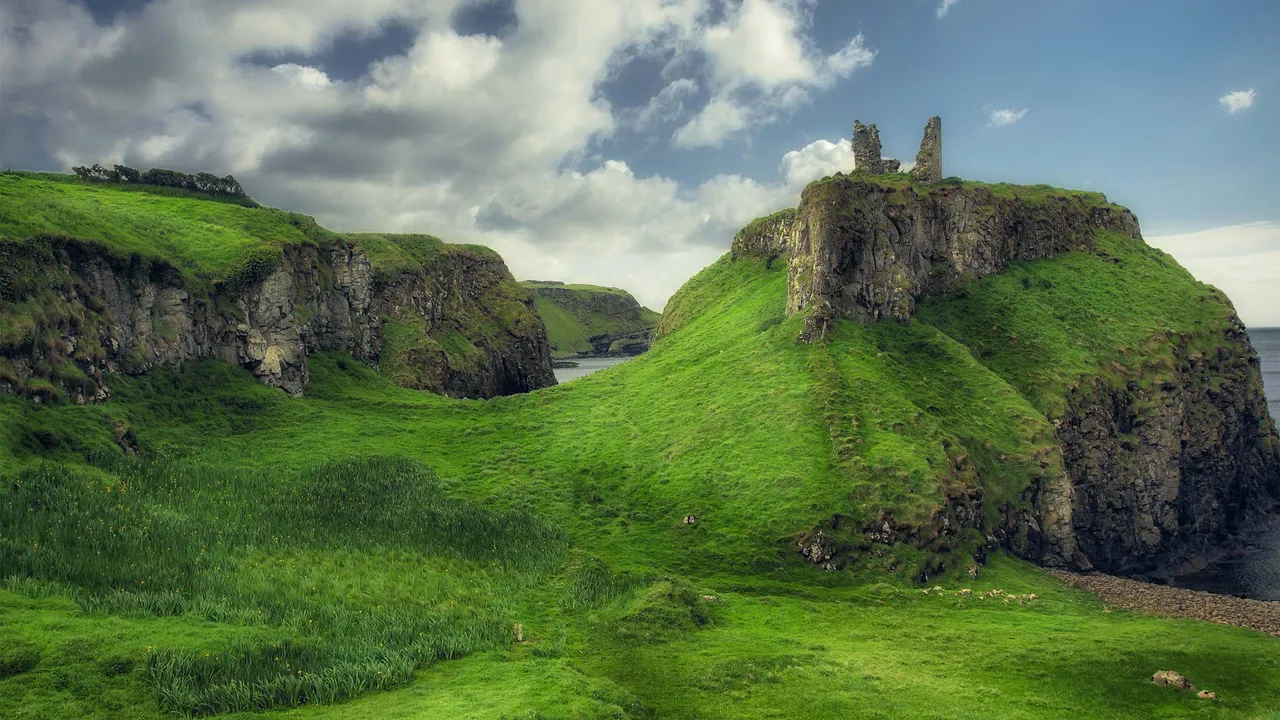
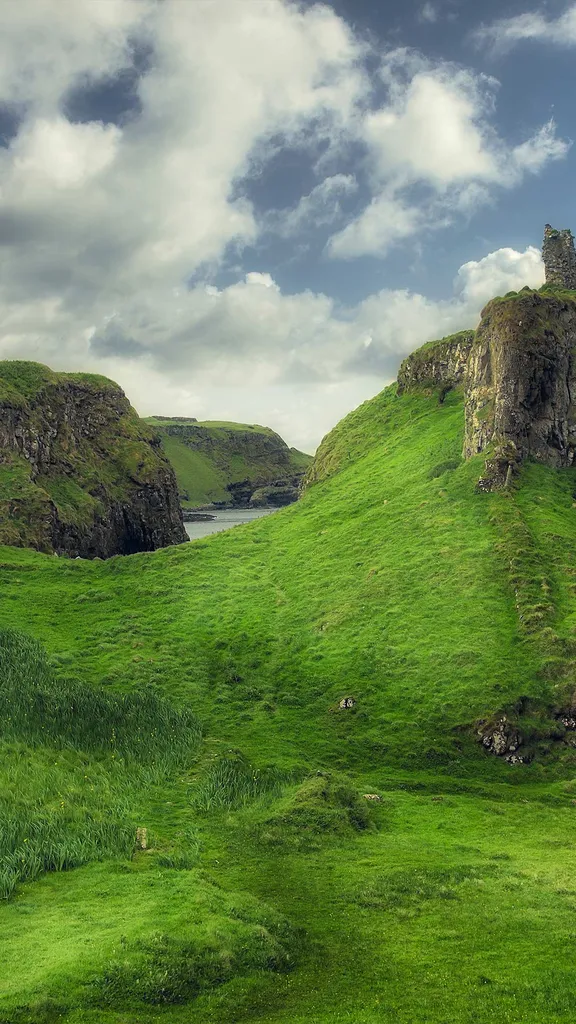
Ruins of Dunseverick Castle, County Antrim, Northern Ireland (© Krzysztof Rogalski/Getty Images)
At Dunseverick Castle in Northern Ireland, history hangs on—literally. Wall fragments cling to a basalt stack above the Atlantic, proving that even ruins can hold their ground. Two thousand years ago, it marked the end of the Slige Midluachra, one of Ireland's five great roads, linking travellers to the royal seat at Hill of Tara. In the 5th century, Saint Patrick is said to have visited and baptised a local man, Olcán, here. Tradition holds that the Lia Fáil (Stone of Destiny), used for crowning Irish kings, was taken from this shore for Scotland.
Vikings attacked the site in the late 9th century. In 1642, Scottish army officer General Robert Munro damaged the castle, and it was later further destroyed during the Cromwellian conquest of Ireland. Yet a small tower survived until 1978, when it finally gave in to the sea.
Today, managed by the National Trust, it's free, raw and refreshingly unpolished—just a short distance from the Giant's Causeway. A ruin, yes—but one that refuses to fade quietly.