
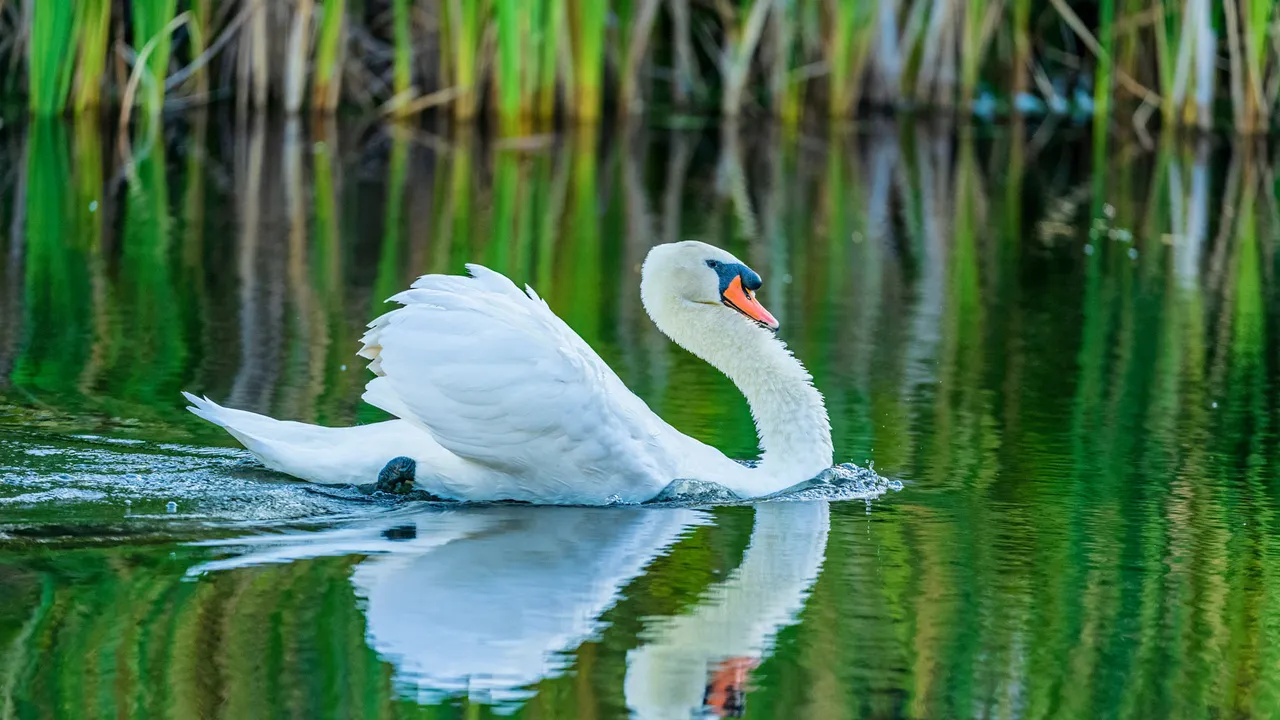
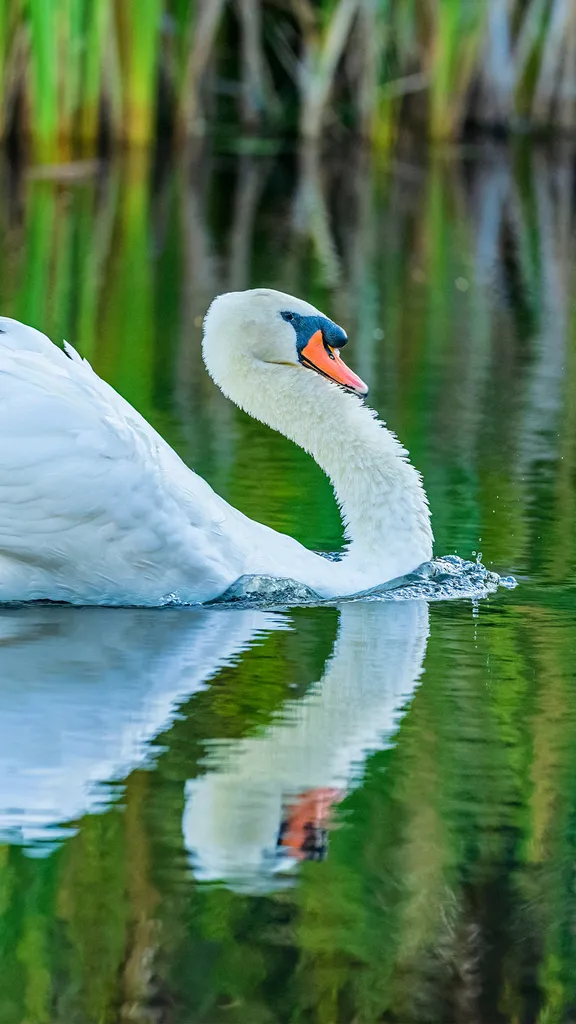
A mute swan reflected on tranquil waters (© Don White/Getty Images)
The Mute swan has about 25,000 feathers.
Swans are admired for their looks, but there is more going on than a calm, graceful glide over the water. These strong, territorial birds have a long history of human involvement. Introduced to Canada from Europe in the 1870s for parks and estates, mute swans established feral populations that now live year-round in parts of Ontario and beyond.
What keeps them going? Their diet is rooted underwater. They feed by upending and pulling up submerged vegetation, and this can strip large patches of wetland plants. During courtship, mute swans produce soft grunts, snorts and a series of rhythmic sounds. A cob and pen form a long-term pair, building nests close to shore. The pen lays several eggs, and both adults guard the brood. Cygnets grow quickly and stay with their parents through their first season.
Their role does not end here. The mute swan is Denmark's national bird and appears in Hans Christian Andersen's tale 'The Ugly Duckling,' a story shaped by the bird's quiet transformation. In Britain, the tradition of Swan Upping still tracks and protects swans along the River Thames.