
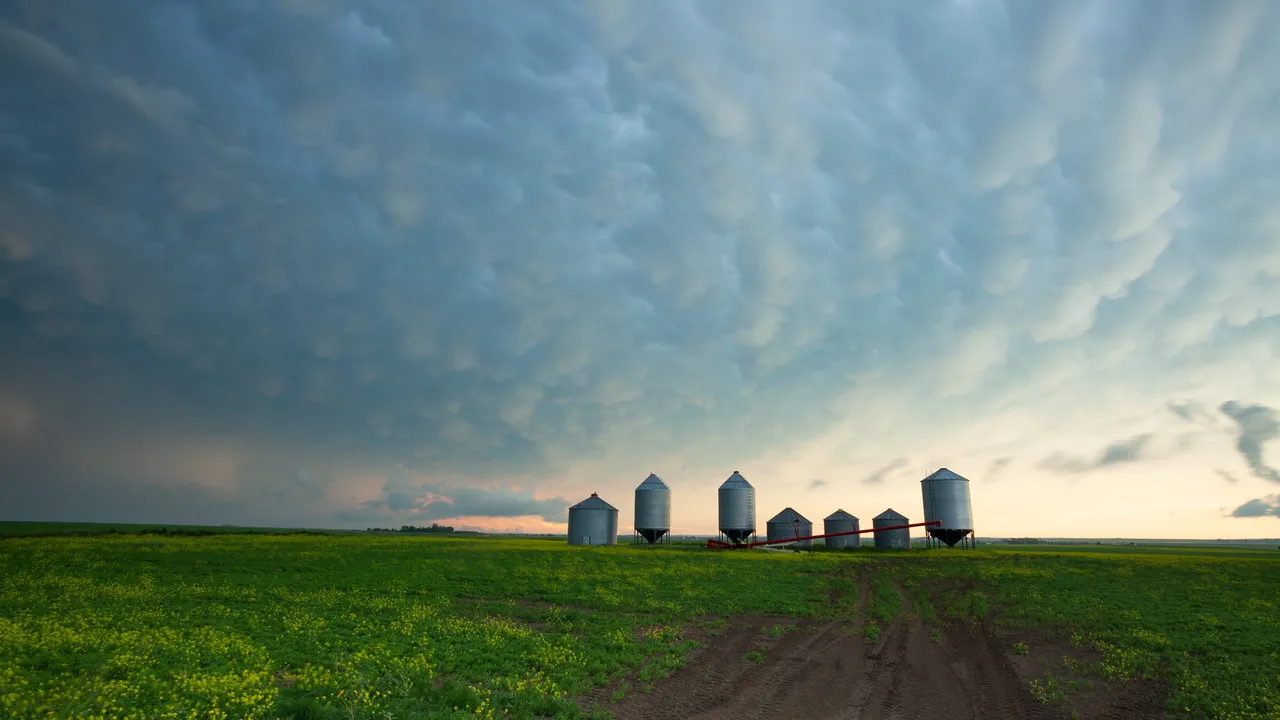
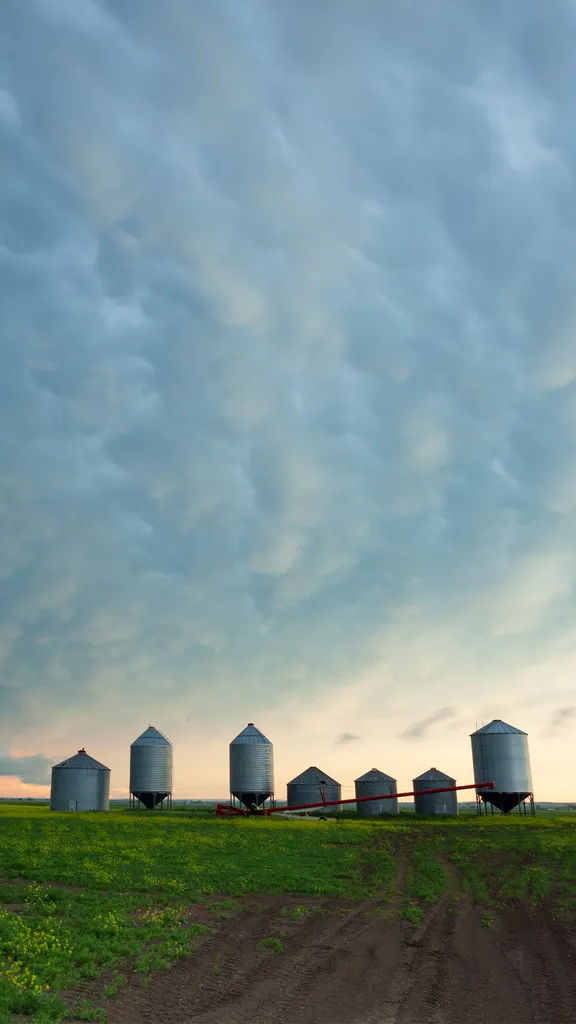
A prairie storm gathers over grain silos in Saskatchewan (© mysticenergy/Getty Images)
In 2025, Saskatchewan produced 92 per cent of Canada's chickpeas.
Picture a farmer watching dark clouds build over the Saskatchewan plains. The crops have already been harvested, but the weather still matters. Where does the grain go next? Often, into grain elevators and storage bins beside fields and railway lines, where it stays protected from rain, moisture and the powerful prairie storms that can arrive with little warning. These storage structures have supported Saskatchewan agriculture for generations, helping to preserve grain quality until it is ready for transport or sale. This is one reason the province has earned the nickname 'Canada's breadbasket.'
Large-scale grain farming expanded in the late 19th century as railways spread across the Prairies, connecting farms with markets across Canada and overseas. Today, Saskatchewan remains a leading producer of wheat, durum wheat, lentils, dry peas, canola and oats. In recent years, it has exported around 60% of the world's canary seed and a significant share of Canada's lentils. These tall structures act as a symbol of the province's farming heritage and its continuing role as one of the world's leading grain-producing regions.