
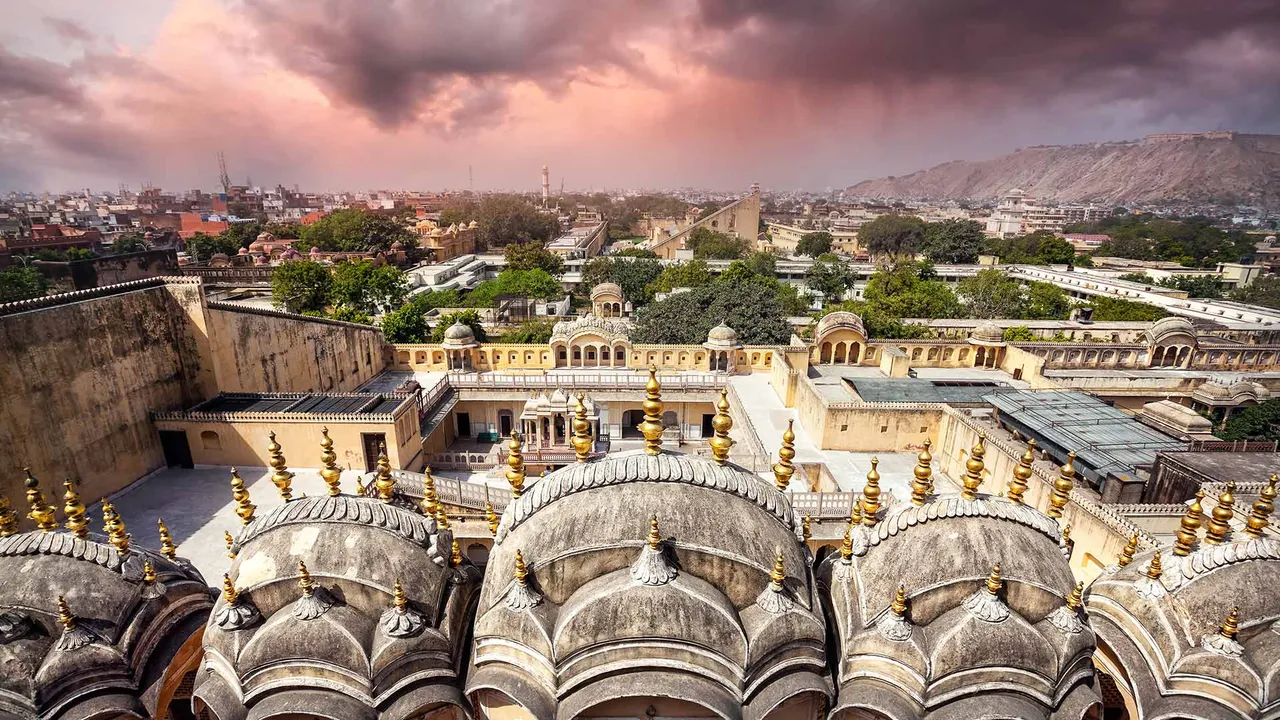
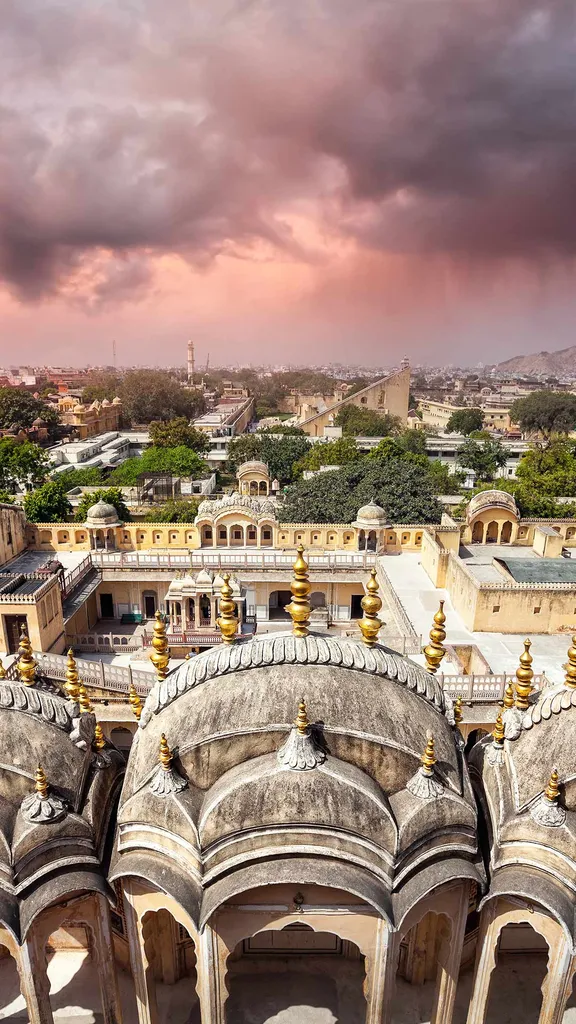
View over Jaipur from Hawa Mahal, Rajasthan (© byheaven/Getty Images)
What if a building could breathe? In the middle of Jaipur, Hawa Mahal does exactly that—pulling in air, pushing out heat and turning architecture into a quiet science experiment. It's less a palace, more a perfectly timed exhale. And yes, it really does live up to its name: the 'Palace of Winds.'
The red-and-pink sandstone landmark was built in 1799 by Maharaja Sawai Pratap Singh and designed by Lal Chand Ustad. It was created for royal women to observe life in Johari Bazaar without being seen, following purdah customs that required them to veil their faces. The façade features 953 small windows, or jharokhas, that funnel breezes through the structure, keeping it naturally cool. Even more striking, the five-storey structure stands without a conventional foundation, supported by its pyramidal shape.
There's no front entrance from the street; access comes via the City Palace side. Inside, ramps replace stairs, easing the climb. Its crown-like shape nods to Lord Krishna, while its design blends Mughal arches with Rajput details. Hawa Mahal proves one thing: when design flows, everything else follows.