
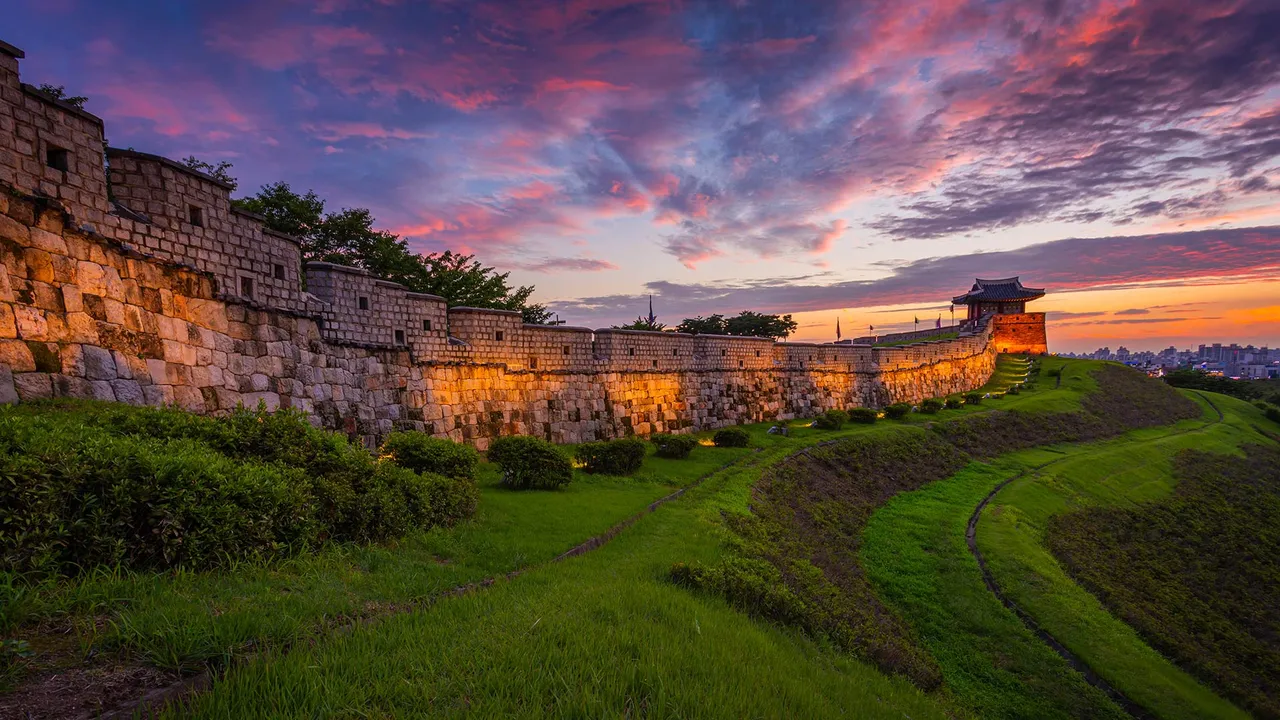
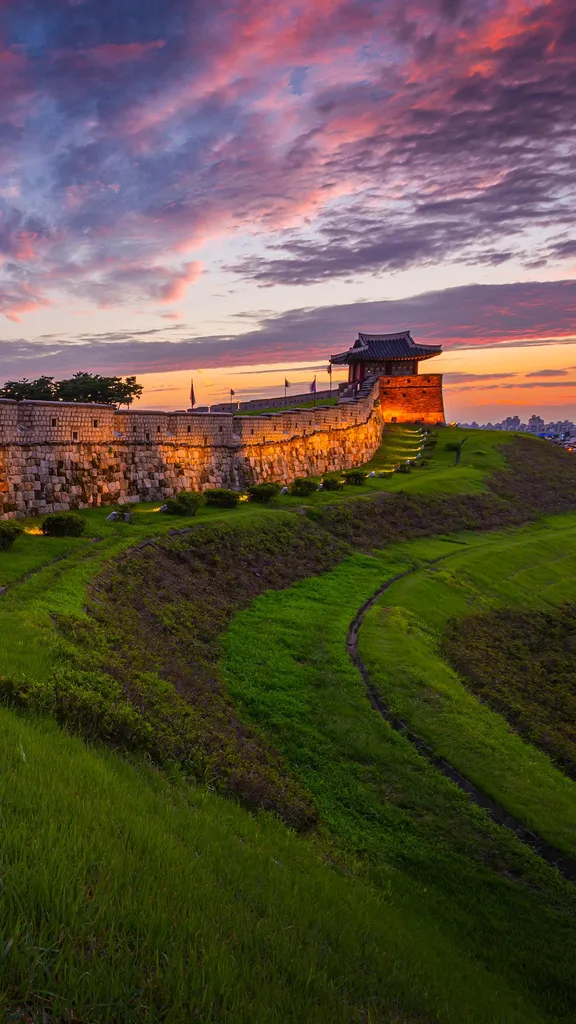
Old city wall of Hwaseong Fortress, Suwon, South Korea (© aomam/Getty Images)
As night settles over Suwon, South Korea, the old city wall pictured here shows that function doesn't necessarily cancel out beauty—it can create it. Built between 1794 and 1796 under King Jeongjo of the Joseon Dynasty, Hwaseong Fortress was more than a barrier. It was policy in stone: a reform‑minded push for a leaner, better-run state, driven by practicality and a deeply personal motive. Jeongjo ordered its construction to honour his father while strengthening a kingdom that wanted smarter systems, not just thicker walls.
Ahead of its time, this masterpiece of Korean fortification hid innovation in plain sight. Rather than wrestling with the landscape, the roughly 3.5-mile wall follows its curves. Bastions widened defensive coverage, watchtowers doubled as signalling points, concealed gates allowed discreet movement and pulley systems quickened construction. Recognised as a UNESCO World Heritage Site in 1997, the site is remarkably intact—and still very much in motion. Hwaseong remains walkable, watchable and woven into daily life. Defence by day, poetry by night.