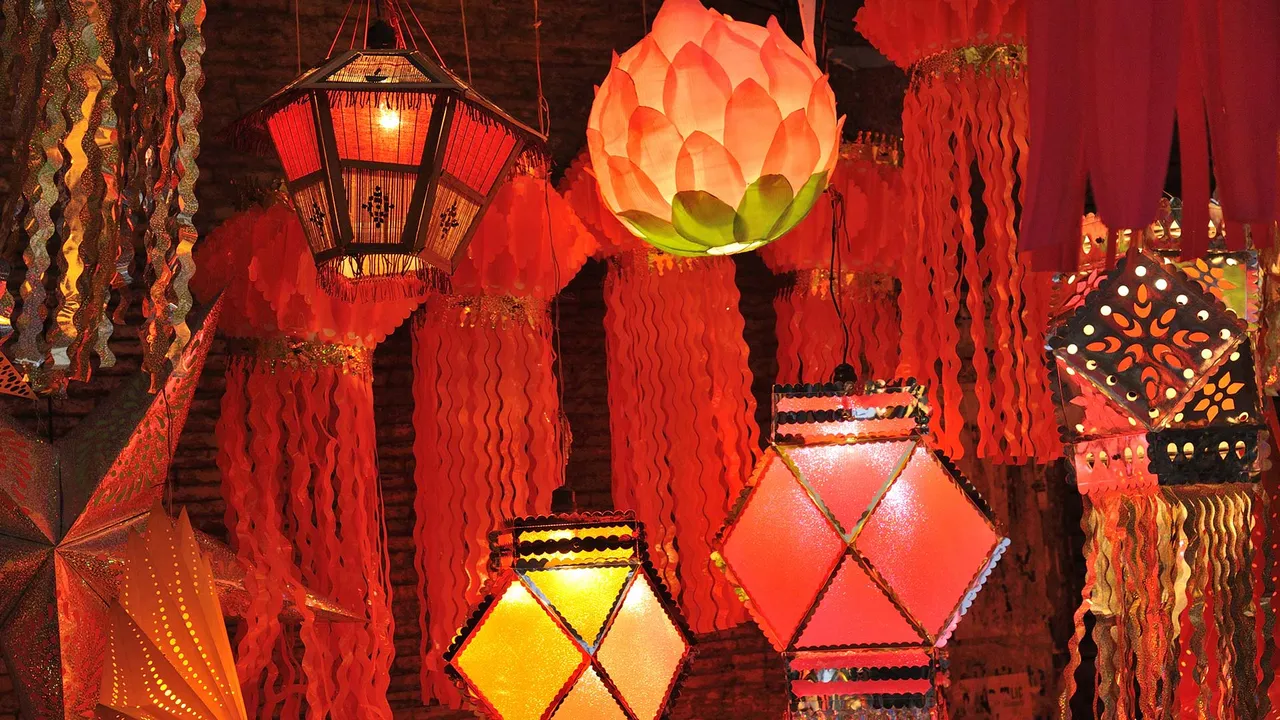
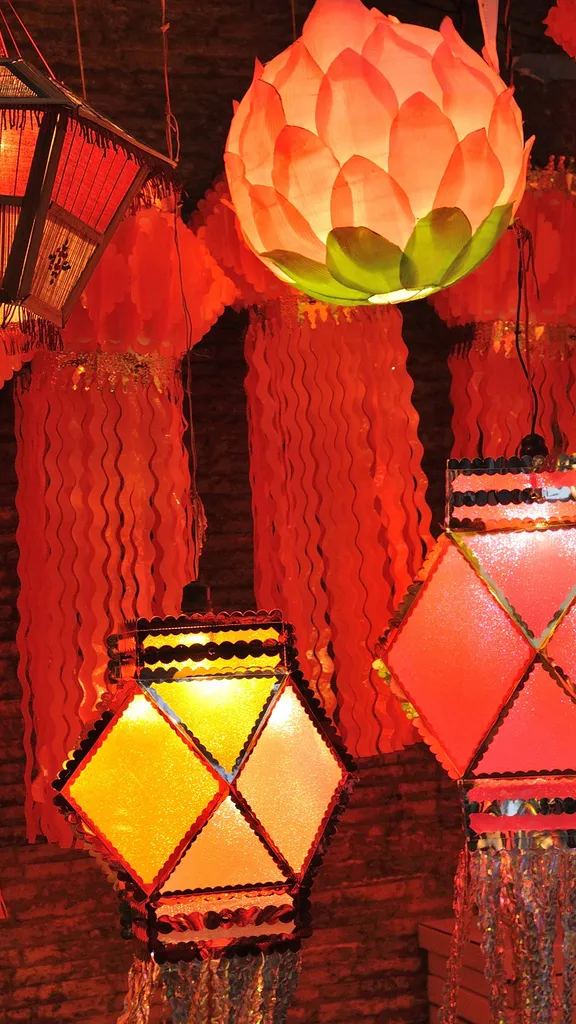
Lanterns for Diwali in Mumbai, Maharashtra, India (© Dinodia Photo/Getty Images)
What happens when the darkest night of the year gets the brightest celebration? Diwali. The Festival of Lights is celebrated by millions worldwide, bringing together diyas, lanterns, rangoli, prayers, sweets and family gatherings.
The name Diwali comes from the Sanskrit 'dipavali', meaning 'row of lights'. The celebration falls on Amavasya, the new-moon night in the Hindu month of Kartik. Across India, the festival carries different stories and traditions. In North India, it marks Lord Rama's return to Ayodhya; in parts of South India and Nepal, it is linked to Lord Krishna's victory over Narakasura. In Bengal, the festival honours the goddess Kali. Jains and Sikhs also observe Diwali for important religious reasons.
Diwali is also widely celebrated across the UK, where generations of families and communities come together to mark the occasion. Celebrations range from gatherings at homes and places of worship to colourful public events, with lights, music, food and fireworks all part of the festivities.

