
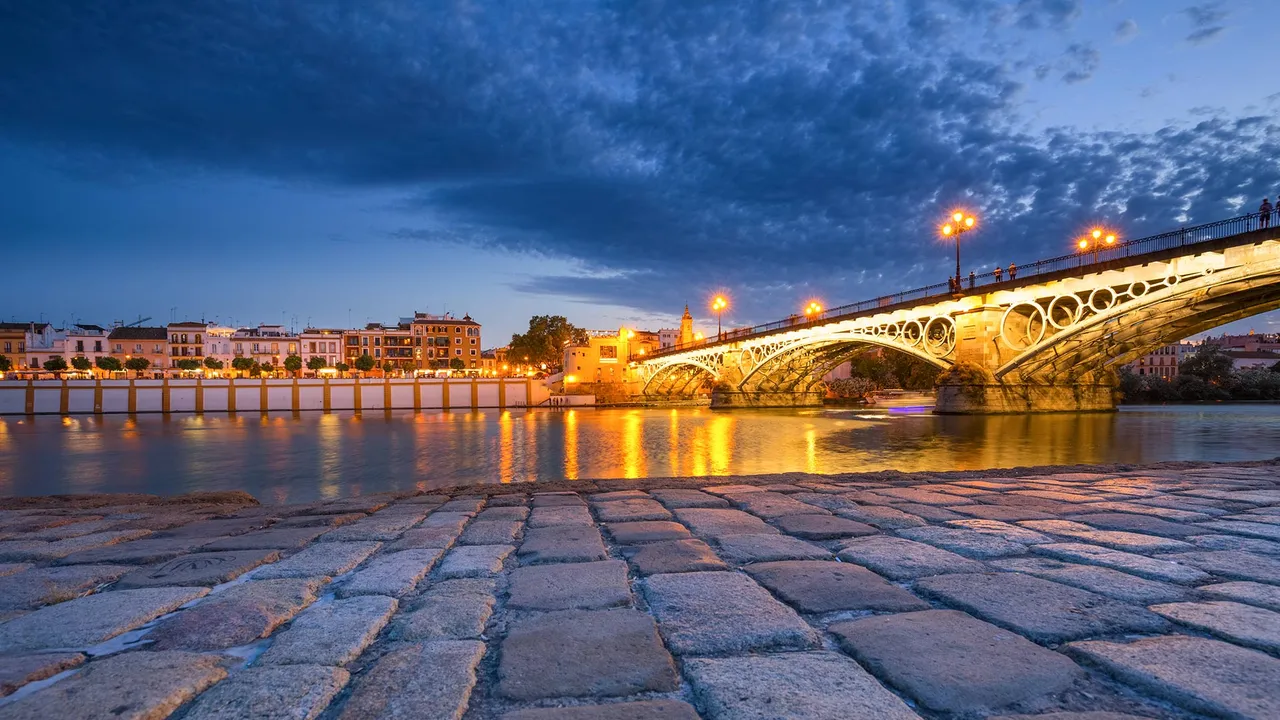
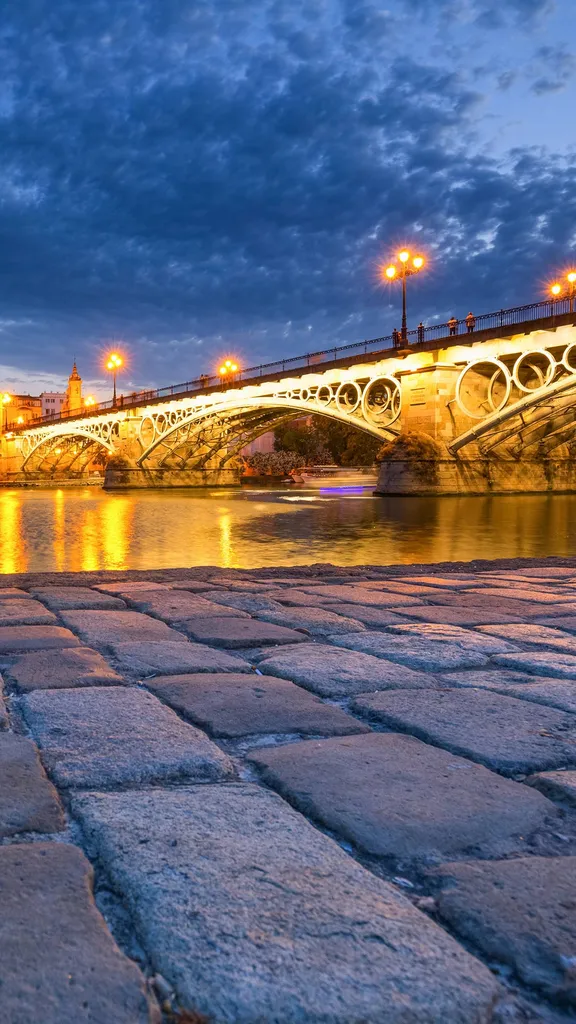
Historic district of Triana, Seville, Spain (© Andrzej Rostek/Getty Images)
Cross the Guadalquivir River in Seville, the capital of Spain's Andalusia region, and the city's rhythm seems to change. On the other side lies Triana, a colourful neighbourhood where ceramics, flamenco and local traditions are woven into everyday life. Since the 19th century, the Isabel II Bridge, also known as the Triana Bridge, has connected the neighbourhood to Seville's historic centre.
Step off the bridge and Triana's distinctive character comes into view. The neighbourhood has a long tradition of pottery and tilemaking, and colourful azulejos still brighten facades and workshops. Its streets have also played an important role in the history of flamenco, an art form deeply associated with Triana. Along Calle Betis, brightly painted buildings face the Guadalquivir.
Triana isn't defined by a single monument. Its appeal lies in its mix of artisans and markets, music and tiled courtyards, riverside terraces and narrow streets. Seville may be just across the water, but Triana has a spirit all its own.

