
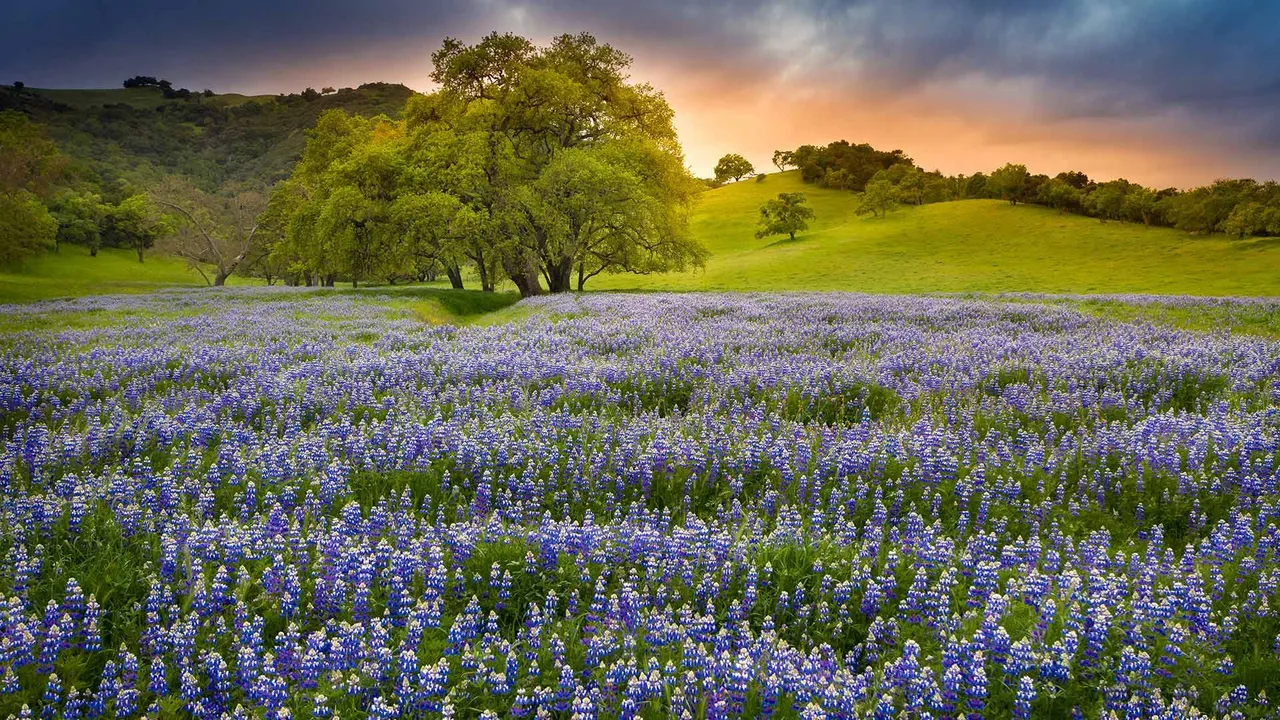
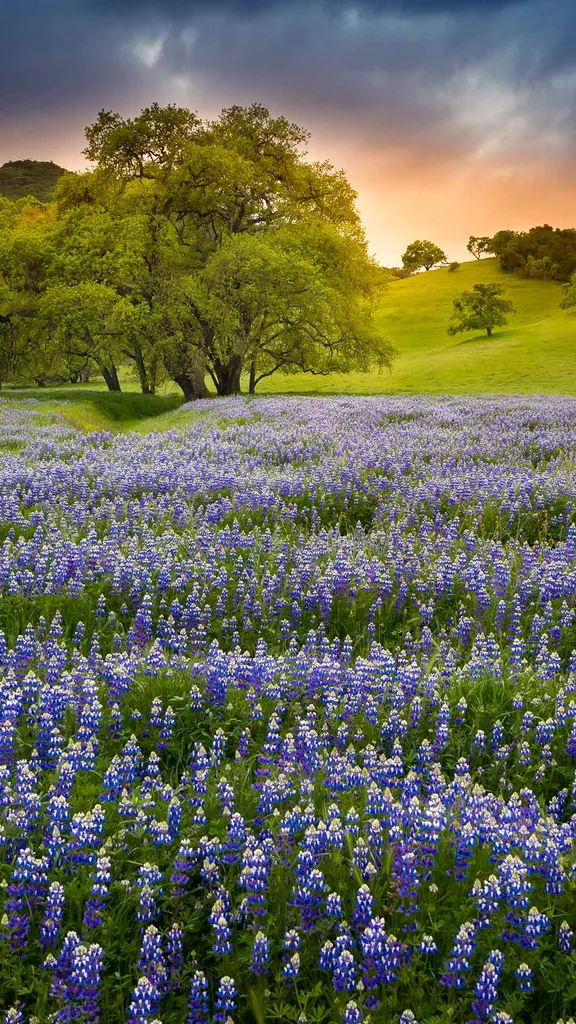
Lupine flowers in bloom, Northern California (© Jeffrey Lewis/Tandem Stills + Motion)
The name 'lupine' comes from the Latin word 'lupus,' meaning 'wolf.' It was once incorrectly believed that lupines 'wolfed' or depleted nutrients from the soil.
As spring sweeps across Northern California, the landscape is transformed by the vibrant displays of lupine flowers in shades of blue, purple, and white. Flourishing in the region's Mediterranean climate, these wildflowers provide a vital source of nectar for pollinators such as bees, butterflies, and beetles. With over 200 species found worldwide, lupines range from coastal varieties to those that thrive in mountain meadows. Beyond their striking beauty, lupines are essential to the ecosystem: by fixing nitrogen underground, they enrich soil fertility and support the growth of surrounding plants, even in nutrient-poor environments.
In some cultures, specially prepared lupine seeds are enjoyed as a snack. However, caution is necessary—untreated seeds are extremely bitter and potentially toxic. By late spring, the vibrant blooms give way to seed pods, continuing the cycle of life for another year. Witnessing this seasonal transformation offers a quiet reminder of how color and life return to the land each year.