
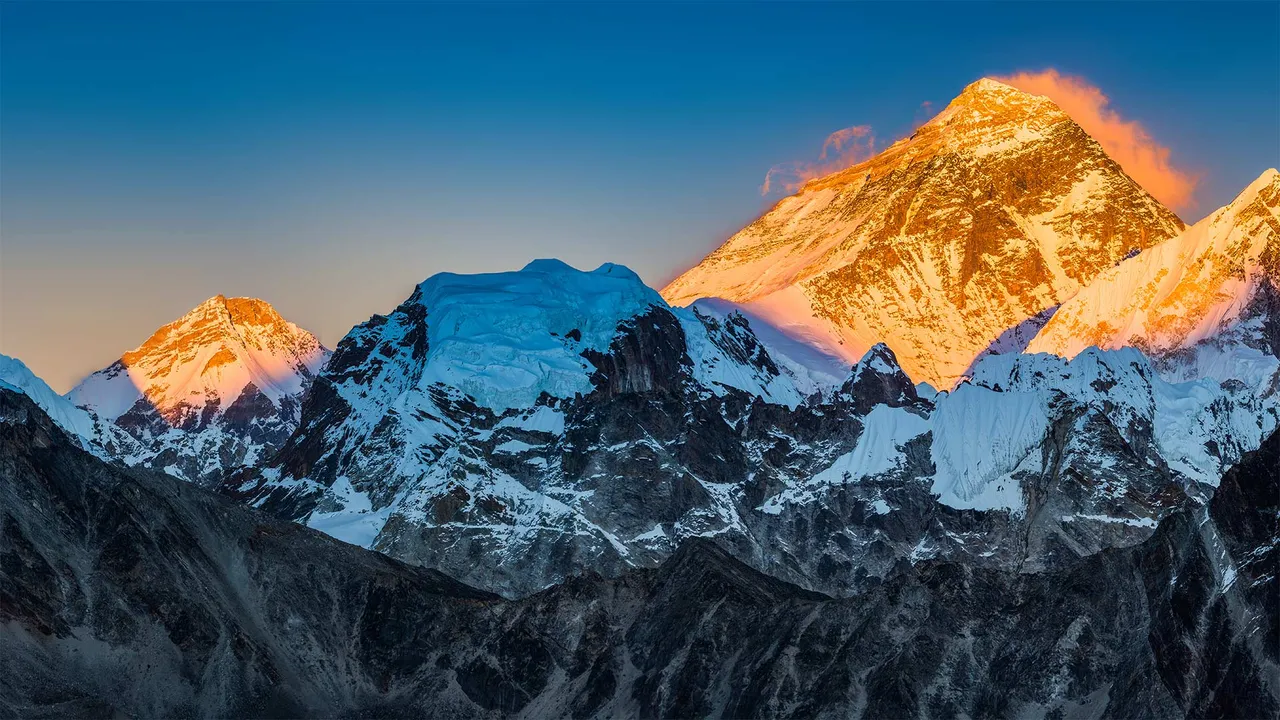
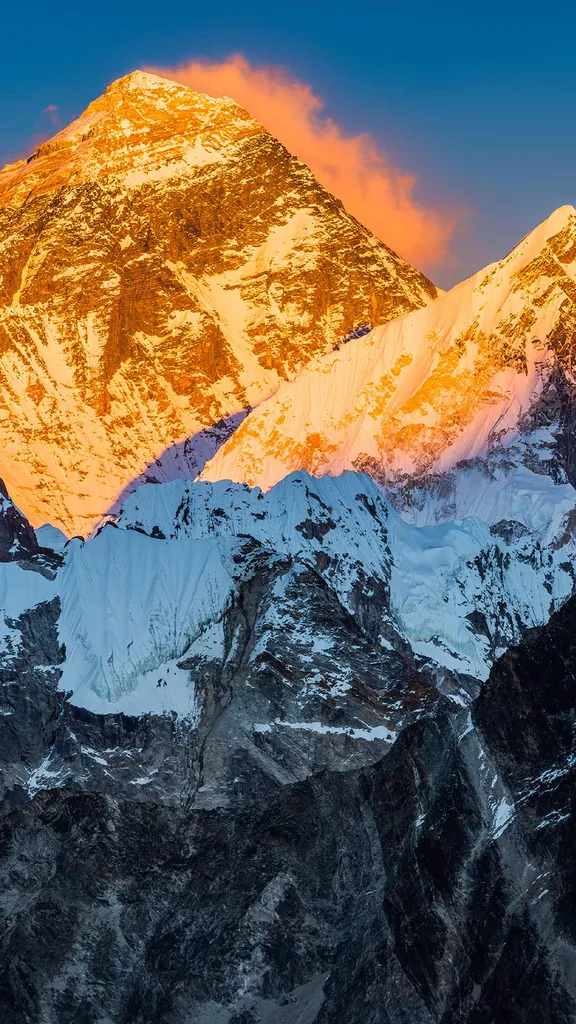
Mount Everest summit, Sagarmatha National Park, Nepal (© fotoVoyager/Getty Images)
In Sagarmatha National Park, Nepal, Mount Everest rises into view, calm and unmoved as evening settles in. But on May 29, 1953, that stillness was broken. After years of planning and weeks of climbing, New Zealander Edmund Hillary and Sherpa mountaineer Tenzing Norgay reached the summit. At over 29,000 feet above sea level, they became the first people known to have stood at Earth's highest point.
That moment became part of a much older story. Long before modern expeditions arrived, local communities honored the mountain as sacred. They lived in its shadow, reading its moods with knowledge refined over generations. Such understanding proved essential in a place shaped by thin air, sudden storms, and unforgiving routes.
The 1953 ascent showed what cooperation could unlock: British logistics, Sherpa expertise, and a broad support team came together on one ridge. As daylight fades across Everest, the glow along its peak recalls a spring day when curiosity and courage lifted humans to the very edge of the sky.