
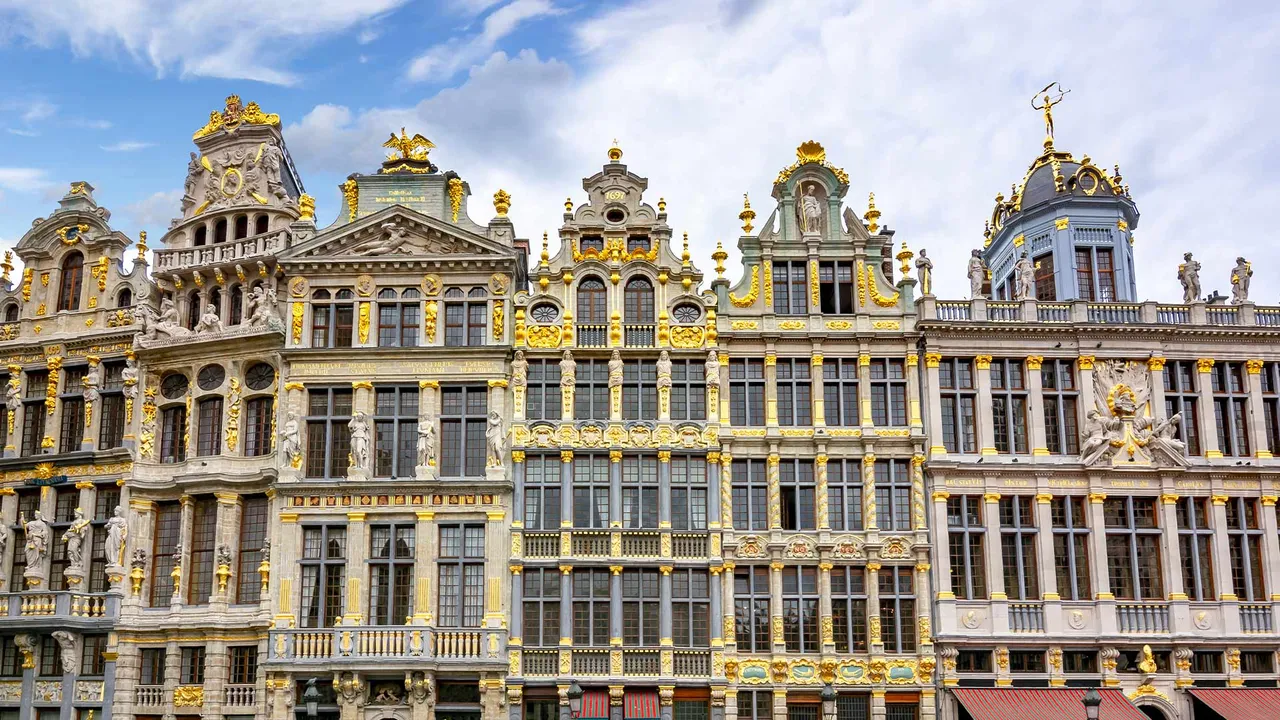
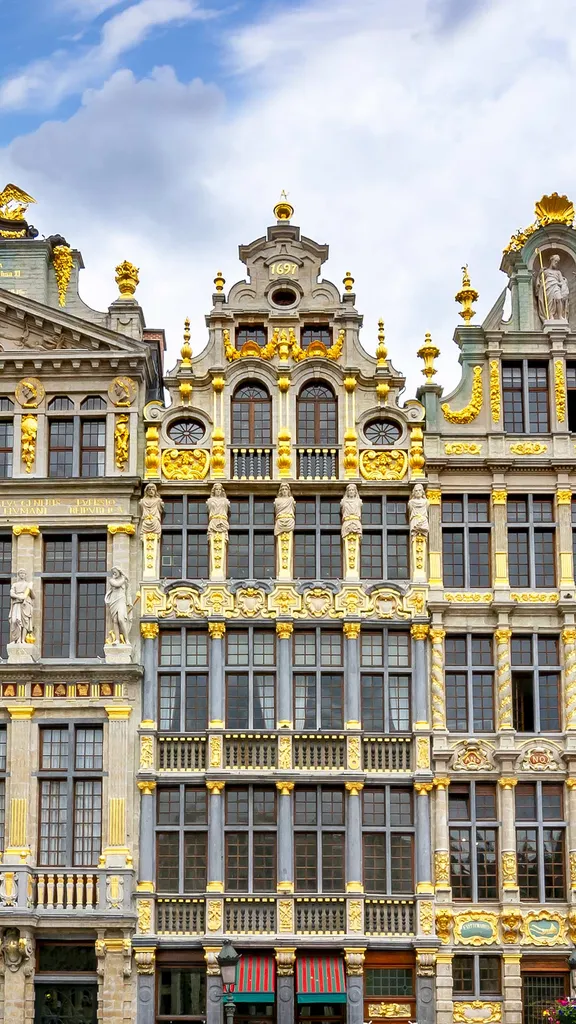
Buildings on Grand-Place Square in Brussels, Belgium (© Vladislav Zolotov/Getty Images Plus)
Few squares in Belgium wear history as well as the Grand Place. The surrounding buildings, seen here, began as guild houses, each funded by a specific trade. Brewers, bakers, merchants, and craftsmen treated architecture as language, translating work, status, and rivalry into stone through reliefs, coats of arms, and generous gold leaf. Styles meet without caution. Gothic verticals rise beside Baroque curves, while the Town Hall, older than its neighbors and unapologetically asymmetrical, holds the composition together.
That unity, however, was forged under pressure. Most of the structures standing today rose from the ashes after 1695, when a French bombardment erased the medieval center. The city responded by rebuilding quickly and boldly, turning destruction into a tightly choreographed urban reply. Life returned quickly: markets, public spectacles, royal ceremonies, festivals, and the famous flower carpet have all taken their turn here. Centuries later, the square keeps its civic pulse. UNESCO calls it heritage. Brussels calls it home—and its most confident self portrait.