
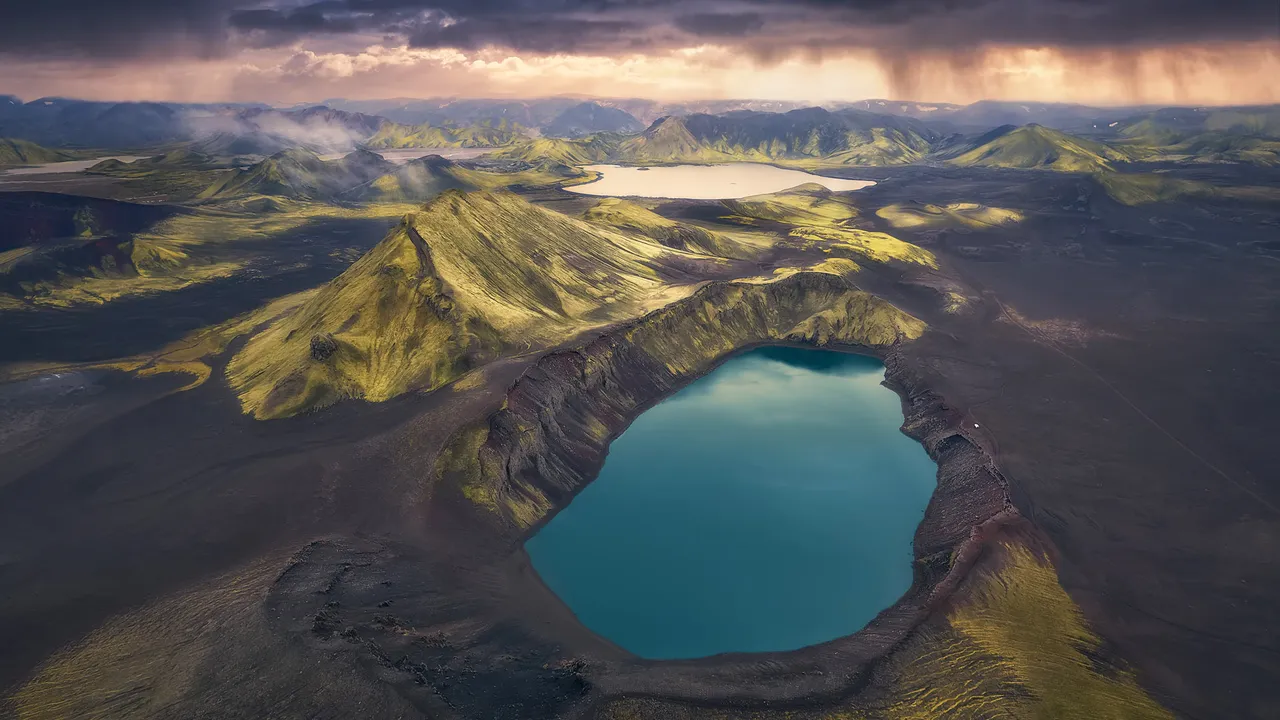
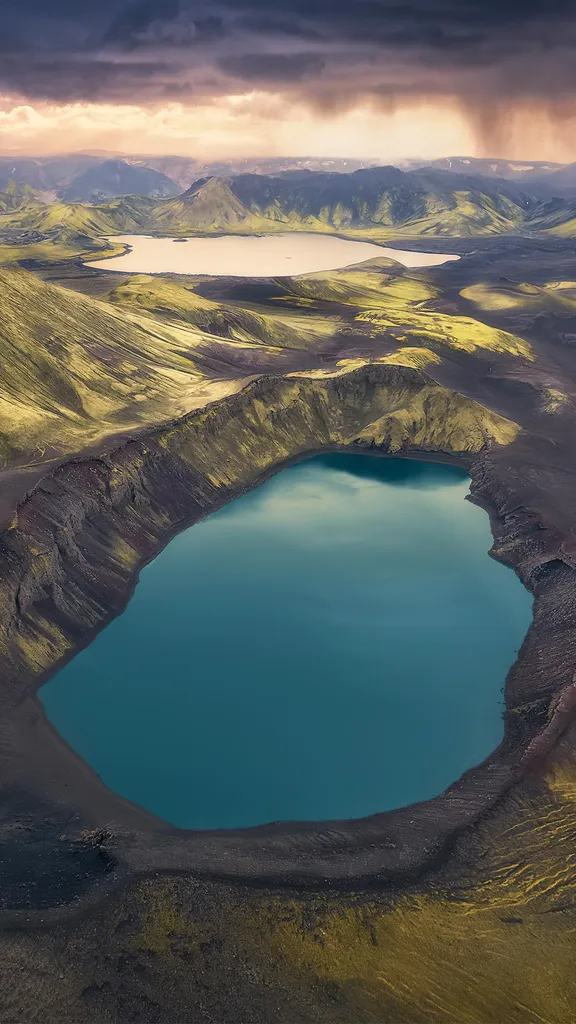
Hnausapollur volcanic crater lake, Fjallabak Nature Reserve, Landmannalaugar, Iceland (© Juan Maria Coy Vergara/Getty Images)
From above, the lake's smooth surface contrasts sharply with the rugged ground surrounding it. Hnausapollur crater lake—also known as Bláhylur—lies in the heart of Fjallabak Nature Reserve, a remote area of Iceland's highlands shaped more by volcanic activity than by human settlement. The crater formed when magma met groundwater, triggering an explosion that carved out the circular basin visible today.
Over time, rain, meltwater and groundwater accumulated within the basin, forming the striking lake seen in today's image. Its colour shifts with light and weather, often glowing turquoise under clear skies and appearing deeper blue or grey when clouds pass overhead. The surrounding slopes reveal distinct layers of volcanic material, recording successive eruptions that once spread across the landscape.
Fjallabak remains largely undeveloped, protected for its geology and vast open spaces. From this aerial perspective, it's easy to see how powerful natural forces shaped Hnausapollur and why Iceland's highlands continue to captivate visitors—a place where the Earth's restless energy remains visible at the surface.