
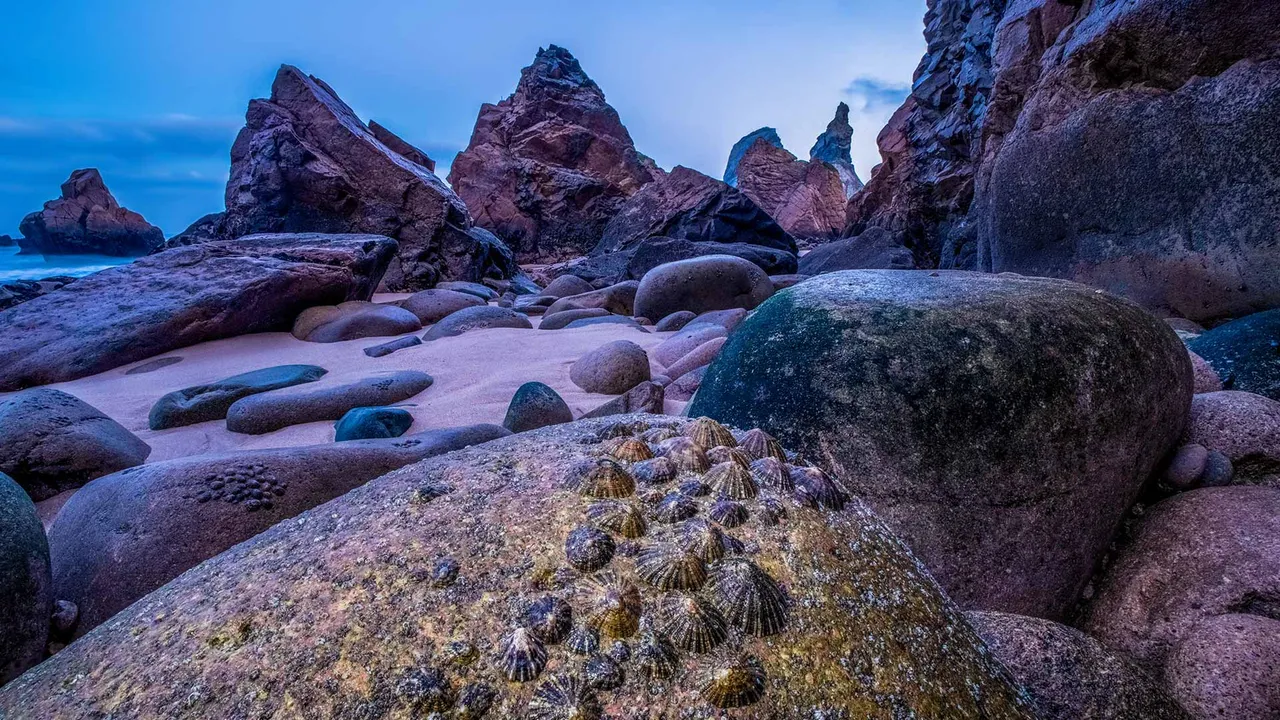
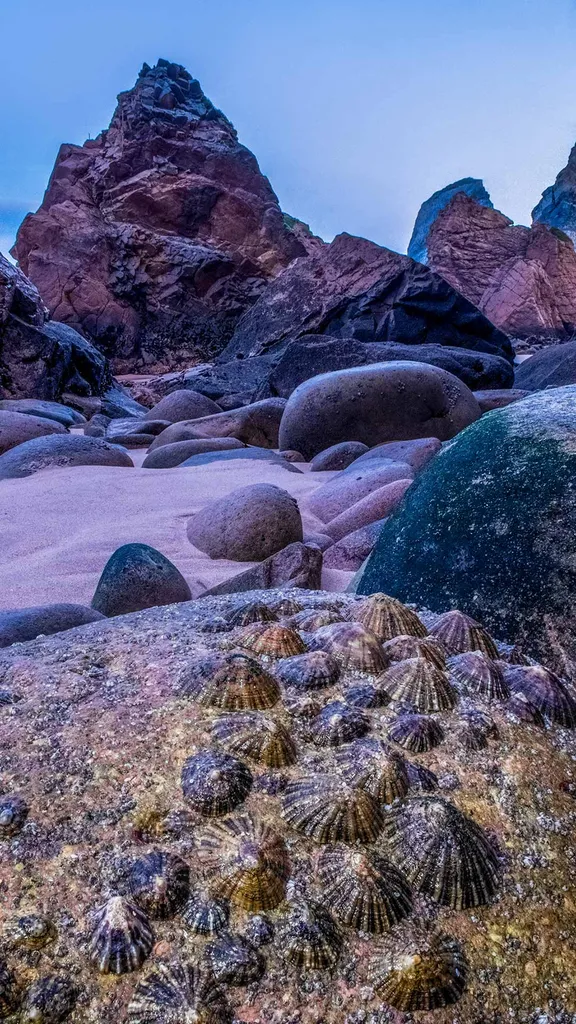
Limpets exposed at low tide on the coast of Praia da Ursa, Portugal (© Theo Bosboom/Nature Picture Library)
Tucked away beneath steep cliffs near Cabo da Roca, the westernmost point of mainland Europe, Praia da Ursa feels like the edge of the continent. Reached by a narrow, rugged trail, this secluded beach along Portugal's Atlantic coast is shaped largely by wind, stone and powerful waves. When the tide recedes, the shoreline briefly widens. Smooth rocks emerge, and with them, small signs of life. Limpets cling tightly to the exposed stone, holding fast where the ocean usually breaks.
These modest marine snails are well adapted to conditions here, using strong suction and low shells to withstand surf, shifting temperatures and long periods exposed to air. During high tide or when submerged, they graze on algae, then return to familiar spots as the sea recedes. Praia da Ursa's isolation makes these moments easy to miss and rewarding to notice. In a landscape defined by scale and force, even the smallest survivors reflect the Atlantic coast's quiet resilience.